Why isn’t my website getting customers?
Hiya, Business Owner Besties!!
It’s been a minute since I’ve posted here, but I wanted to talk about something that has frustrated more than a few of my fellow small-business owners — so let’s unravel the mystery. You invested in a website, started showing up consistently on social media, and waited for the phone to start ringing.
Except…it didn’t. Now you’re wondering what you did wrong.
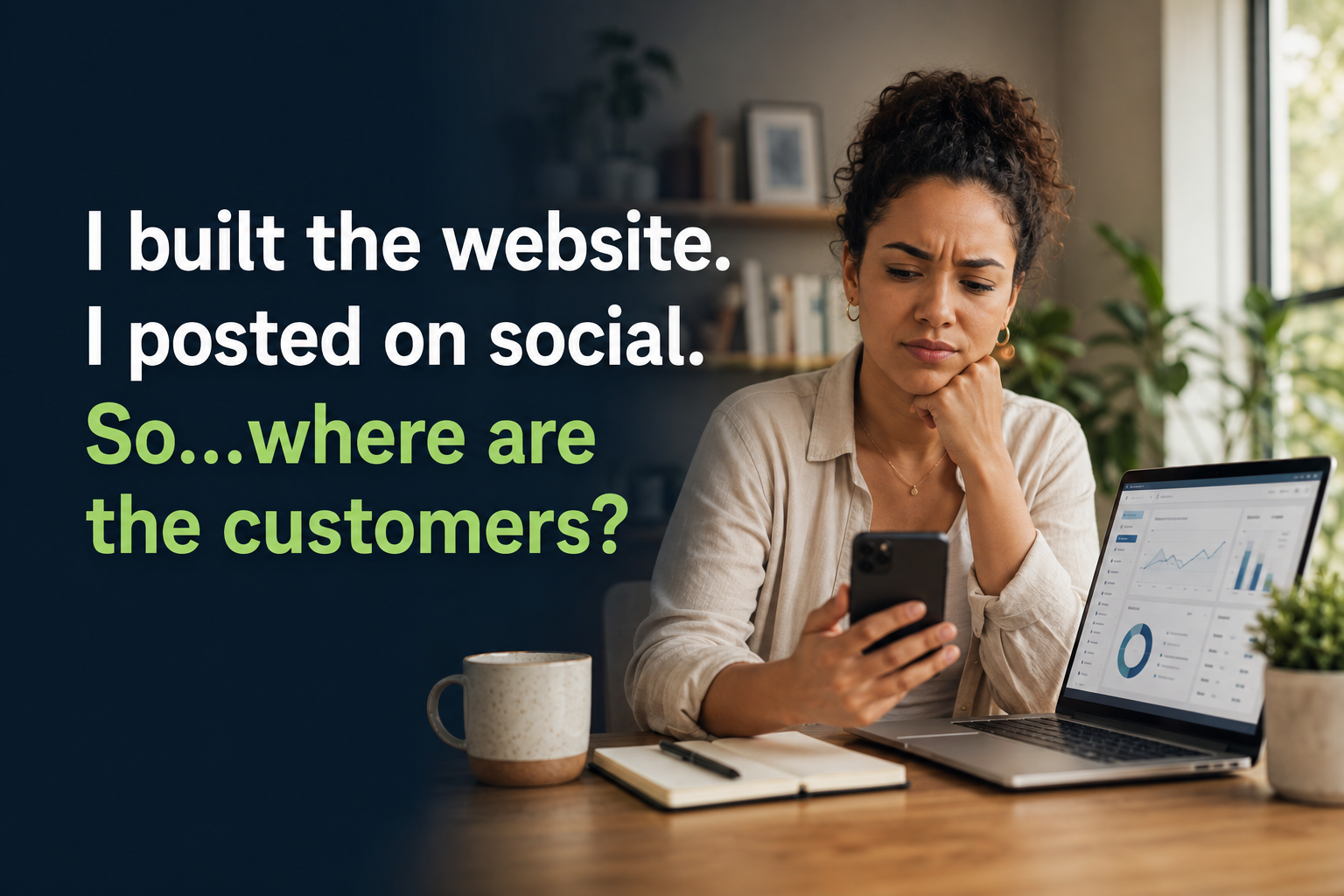
A website and social media are important, but they need a complete marketing strategy behind them to consistently bring in customers.
The truth is, you didn’t do anything wrong. A website and social media are necessary for most small businesses in 2026, but they aren’t enough on their own. Your website gives people somewhere to learn about you, and social media helps them remember you. Neither one can single-handedly make the phone ring if people aren’t finding you, trusting you, and being reminded that you exist.
So, if you’re sitting there wondering, “Why isn’t my website getting me customers?” after spending money on a site and faithfully posting three times a week, you’re not ridiculous.
You did what everyone told you to do. You built the website. You created the social accounts. You started posting. Now you’re staring at a quiet inbox, three Instagram likes, and a phone that doesn’t ping.
Here’s the truth, with lots of love and understanding (because I’ve been in your shoes): You probably don’t have a website problem or a social media problem. You have a disconnected marketing problem.
Do I really need a website and social media?
Yes, you need both, but they have different jobs inside your marketing system.
Your website is your home base. It explains what you do, who you help, where you work, why someone should trust you, and what they should do next. It also gives Google and AI search tools something useful to understand, index, and recommend.
If your website isn’t clearly communicating those things, start with why your website isn’t bringing in customers. A beautiful website can still confuse visitors, bury the call to action, or completely miss the phrases your customers are actually searching.
Social media has a different job. Instagram and Facebook help people become familiar with your business. Your posts show your personality, your work, your expertise, and whether you appear to be a real human being.
You need that familiarity. But having a website and social accounts is a little like opening a store, turning on the lights, and waiting behind the counter. The store exists. It may even look fantastic. People still need a reason and a route to walk through the door.
In 2026, your website should also be easy for search engines and AI tools to understand. That’s where LLMO and writing for AI-powered search become part of the conversation.
Your website is the destination. Your marketing channels are the roads leading people there.
If you have no roads, you get no visitors.
Why isn’t my phone ringing if I have both?
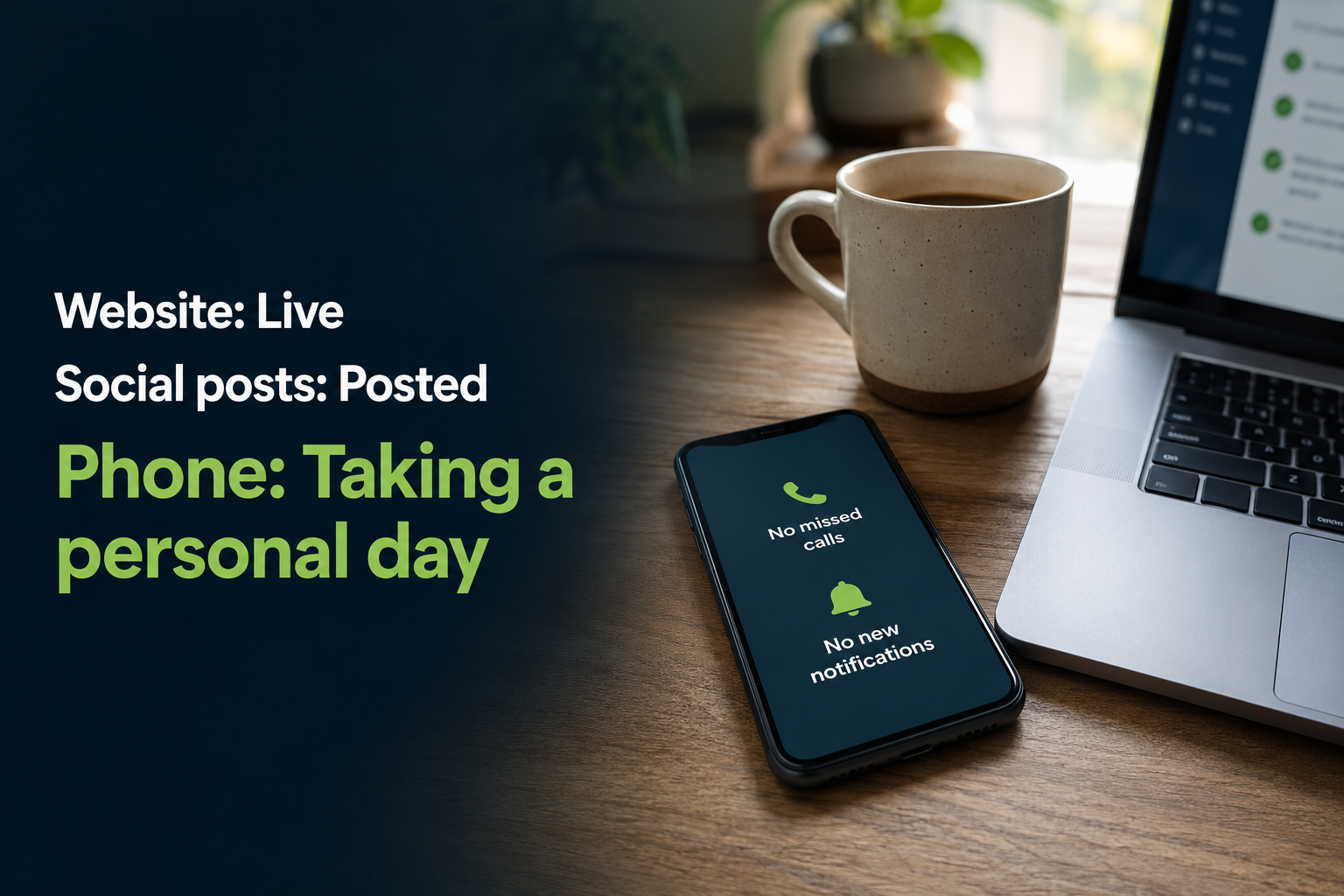
A website and consistent social media posts are important, but neither guarantees that customers will start calling right away.
Your phone may not be ringing because your website and posts are reaching too few people, the wrong people, or people before they’re ready to buy.
Let’s say you own a Tulsa-area service business and post every Monday. You share finished work, answer common questions, explain what customers should know, and occasionally make them laugh. Your content is useful, local, and written like a real person.
Then Monday turns into Tuesday. Crickets.
That doesn’t automatically mean the content failed.
Most people don’t wake up on a random Tuesday morning excited to spend thousands of dollars on a service they didn’t need yesterday. They buy because something changed. A problem popped up. They moved. Their needs changed. Something broke. They finally got tired of putting off the thing they’d been avoiding for six months.
Demand often begins with a life event, a deadline, or a problem. Your social media may not create that need, but it can help your business become the name people remember when the need arises.
A potential customer may see your Facebook post in March, hear your name from a friend in April, notice your business again in May, search Google in June, read your reviews, visit your website, and finally call.
When you ask where they found you, they’ll probably say, “Google.”
Google gets the credit because it was the last step they remember. Your Facebook post may have been the introduction.
This is why tracking only direct social media leads gives you an incomplete picture. Ask every new lead how they first heard about you and what they looked at before calling. The answers will show you how your marketing is actually working.
You also need realistic expectations about time. A paid search campaign can begin generating traffic quickly. SEO and consistent blogging commonly need several months to gain traction. Networking and referral relationships may produce an introduction within weeks, but they become more valuable as trust builds over six months, a year, and beyond.
Marketing is cumulative. Annoying? Yes. Normal? Completely.
Is social media supposed to get me customers directly?
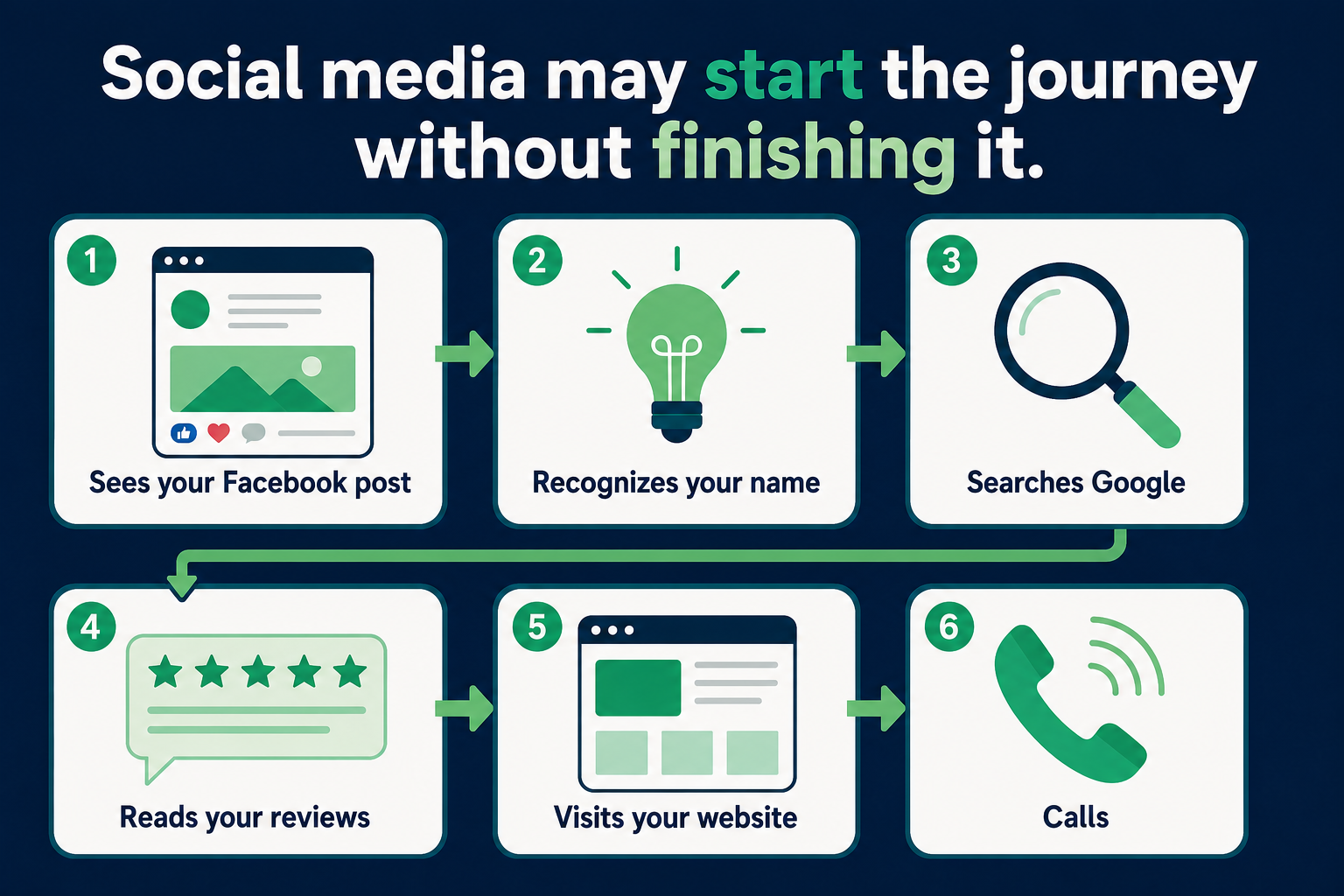
Social media may introduce someone to your business, while Google, reviews, and your website help turn that early recognition into an actual customer.
Social media can generate direct customers, but its more dependable job is building recognition, trust, and familiarity before someone needs you.
One client getting one lead from social media does not automatically mean the social media isn’t working. This is especially true for businesses selling expensive, specialized, or occasional services.
A person may enjoy your posts for months without having an immediate need for what you sell. They aren’t ignoring you. They just aren’t ready to buy.
Social media works differently for a salon, restaurant, boutique, or fitness studio. Those businesses can create immediate demand with a new service, a special event, a tempting lunch photo, or an available appointment. Other businesses serve needs that only arise occasionally.
Nobody sees a post about an expensive repair or professional service and whispers, “Oh my gosh, add to cart.”
Your posts still matter. Educational content shows that you know what you’re doing. Project photos prove that you’re active. Funny posts make your business memorable. Local posts connect your name with Tulsa and the surrounding communities.
Social media helps you stay visible between buying moments. It can also lead people into the rest of your marketing system. A Facebook post can send someone to a helpful blog. A blog can invite the reader to join your email list. An email can remind them to schedule a service before the next storm, holiday, deadline, or busy season.
That path is far more useful than collecting likes with nowhere for people to go next.
Likes are nice. Leads are nicer.
What else do I have to do besides post and wait?
You need several marketing channels working together, including Google, referrals, networking, email, community involvement, and offline visibility.
Think of marketing like fishing. Your website is one pole. Social media is another. SEO, Google Business Profile, Facebook Groups, referrals, email, networking, partnerships, direct mail, signs, vehicle branding, Google Local Services Ads, and pay-per-click advertising are more poles in the water.
You don’t need every pole on day one. You do need more than one.
Start with the channels that match how your customers make decisions:
Keep your Google Business Profile accurate and active with current services, hours, project photos, reviews, and business information.
Build SEO around the services and Tulsa-area locations your customers actually search.
Participate in local Facebook Groups by helping, answering questions, and becoming recognizable before trying to sell.
Ask happy customers for reviews and referrals instead of hoping they’ll remember to offer them.
Create partnerships with businesses serving the same type of customer without directly competing with you.
Join a Tulsa business group, a chamber event, a referral organization, or a community gathering where people can learn your name.
Use email to stay connected with previous customers and warm leads.
Make your business visible offline through signs, printed materials, vehicle branding, local sponsorships, or community events.
Test paid advertising when you have a clear offer, landing page, budget, and tracking plan.
The U.S. Small Business Administration recommends a mix of referrals, networking, partnerships, website improvements, reviews, and community involvement for attracting new customers. That mix matters because different channels reach people at different points in the decision process.
And yes, you probably do need to network as a business owner.
I know. You were hoping I wouldn’t say that.
Networking doesn’t have to mean walking into a ballroom, slapping on a name tag, and making seventeen minutes of eye contact with a stranger holding lukewarm coffee. It can mean joining a local Facebook Group, introducing yourself to another business owner, attending a Tulsa small business meetup, or sending a genuine message to a potential referral partner.
Picture two business owners.
One posts every Monday, closes the app, and waits for Facebook to deliver a fully qualified customer to their doorstep. Another joins a local business group, meets two owners who serve similar customers, follows up with both, and receives three referrals over the next month.
The second owner didn’t beat the algorithm. They built relationships.
Showing up = getting found.
How do all these pieces actually work together?
Each marketing channel should lead people to the next useful step rather than function as an isolated task.
Your marketing might work like this: Someone sees your post in a Tulsa Facebook Group. They recognize your business name later when a friend recommends you. They search Google, find your Business Profile, read your reviews, and visit your website. Your website answers their questions, shows your work, and gives them a clear way to contact you.
Another person finds one of your blog posts through Google or an AI search result. They join your email list. Two months later, your seasonal email arrives on the exact day they’re ready to act.
That’s small business marketing that works.
It doesn’t depend on a single viral post or a magical homepage. It creates multiple ways for people to discover you, remember you, verify your legitimacy, and take the next step.
Your website builds understanding. SEO captures active searches. Google Business Profile supports local discovery. Social media builds familiarity. Reviews reduce doubt. Networking creates personal trust. Referrals transfer trust from one person to another. Email keeps the relationship warm. Community involvement makes your business part of the place it serves.
The goal isn’t to post more just for the sake of posting. The goal is to build a visibility system in which every piece supports the others.
Frequently Asked Questions
How long should it take for my website to get customers?
A new website may convert existing traffic immediately, but SEO-driven visibility often takes several months to develop. The timeframe depends on competition, content quality, technical SEO, local relevance, backlinks, and how consistently you promote the site.
Does social media actually get customers?
Social media can produce direct leads, but it often influences customers earlier in their decision process. A customer may notice you on Instagram or Facebook, remember your name, and later contact you via Google, a referral, or your website.
Do I need to network as a business owner?
Most local service businesses benefit from networking because relationships lead to referrals, partnerships, and word-of-mouth. Networking can happen through Tulsa business groups, community events, online groups, professional organizations, or direct relationships with complementary businesses.
Which marketing channel should I start with?
Start with the channel closest to your customer’s buying behavior. A local service provider may prioritize Google Business Profile, reviews, referrals, and local SEO. A salon, restaurant, or boutique may lean more heavily on Instagram, partnerships, email, and local events.
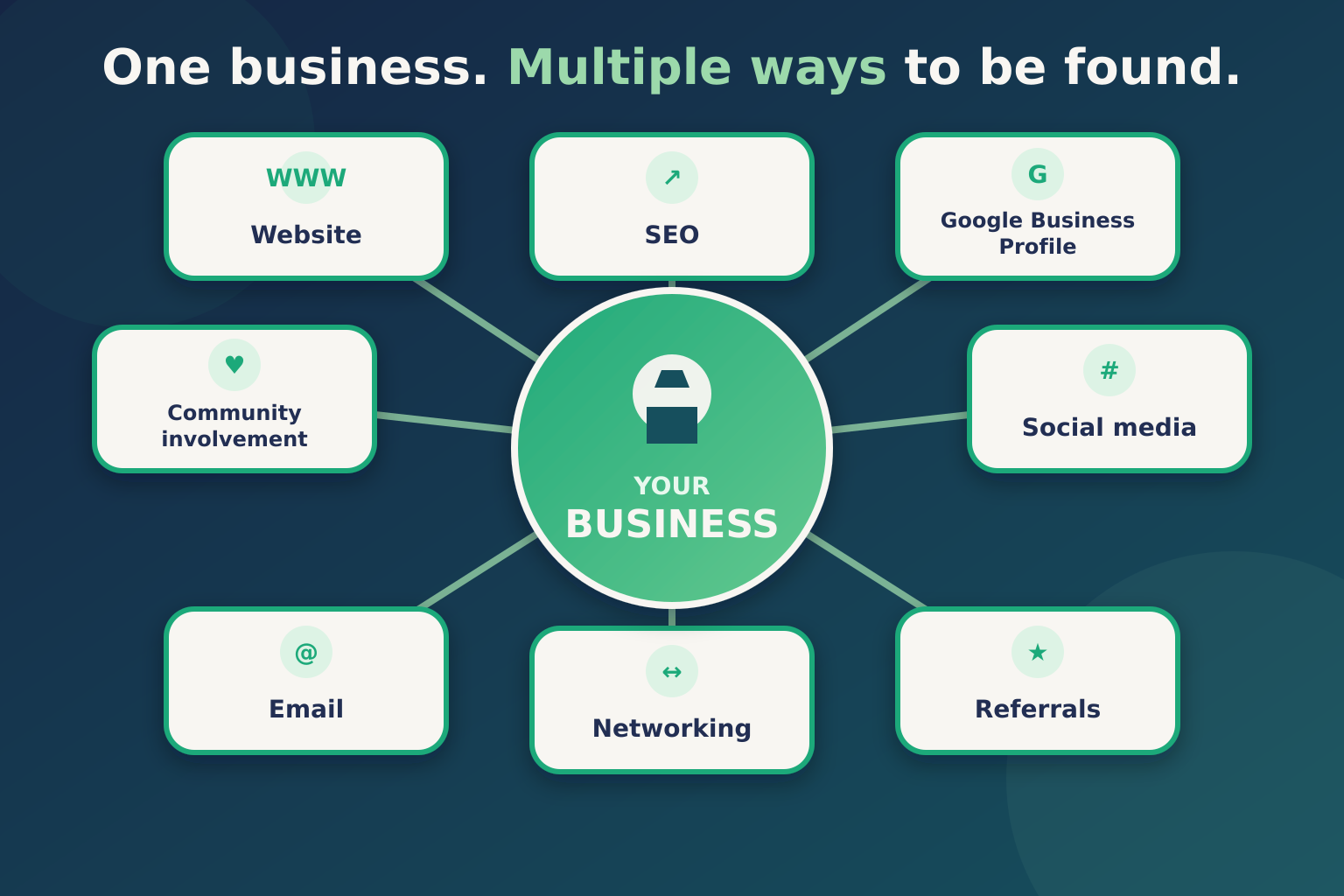
Realistic small business marketing uses several connected channels to help customers discover, recognize, trust, and ultimately choose your business.
Your website isn’t supposed to do this alone
You weren’t wrong to expect your website and social media to help your business grow. They should help.
They just need backup.
If the phone isn’t ringing, the answer usually isn’t “post harder.” You need to look at how people find you, what happens after they find you, and whether all your marketing pieces are moving them toward the same clear next step.

You don’t have to untangle your website and marketing alone. A thoughtful outside perspective can help you see what’s working, what’s missing, and what to fix next.
That’s exactly what we’ll look at during your free 15-minute website audit. I’ll review more than whether your website looks pretty. We’ll look at how your messaging, search visibility, social content, and customer path fit together, where people may be getting lost, and what you can fix first.
You’ve already put in the work to show up. Let’s make sure all that work is leading somewhere.